To Know and Be Known:
How Worlds Beyond Number breaks down nationalist thinking for veterans and academics
Hello everyone! Welcome to my first blog series To Know and Be Known! This post should give you a good idea about what this series is going to be about!
Militarism requires a specific mindset that allows these things to happen. Many have attempted to describe this experience, it is not new. However, there is a piece of media that I believe gets to the heart of this process not only by the skill of its storytellers but by the unique characteristics of its medium. I am attempting to connect these ideas to ones from other academic sources.
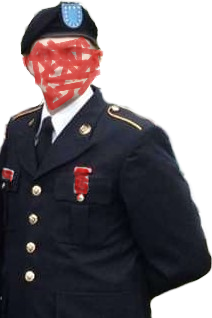
The image on the right is me during basic training graduation. In the moment, I was proud. But the weight of what I learned hangs on my shoulders even still.
I have had personal experiences with justifying the unjustifiable. Some know the smell of firing an assault rifle. The smell of sweat and canvas on a hot day. Small moments from service appear in my mind now and then. It was in basic training, my platoon had just finished our first time at the gun range. We spent the entire day practicing beforehand by filling canteens with water and resting them on the ends of the rifles to build up muscle. So we could keep our aim steady. The sour stench of lubricants, gunpowder and metal quickly followed each live round firing. Shooting did not come easily to me in those moments, many nights spent restlessly thinking "To what hell have I sent myself to?" What do you have to break down in a person first before you build them back up? A mind reshaped for orders, for obedience. It is a chilling kind of pride when someone uses "killers" as a compliment.
In this blog, I will be doing a close study of the podcast Worlds Beyond Number, an actual-play Dungeons and Dragons podcast. For those not familiar with actual plays they are like radio dramas, where stories are told only through sound but features music and sound effects and the voices of the cast. I'll be studying a specific character within the podcast that relates to my own personal experiences through the lens of nationalism and militarism. This character is featured in Worlds Beyond Number's first campaign called The Wizard, The Witch, and The Wild One.

One of the main articles that I will be using is "Education After Auschwitz" by Theodor Adorno, where he specifically utilizes a concept known as reified consciousness to describe the torturers in Auschwitz. In Adorno’s own words “It is a consciousness blinded to all historical past, all insight into one's own conditionedness, and posits as absolute what exists contingently.” It is one that relies on the belief that systems of power that exist now are inevitable and actions within that system can be justified towards greater causes. Aabria Iyengar explores this as well in her quote, “The lie was that she was the result of like the last couple of things that she thought or experienced and just was constantly shunting the wisdom of putting it all together…”
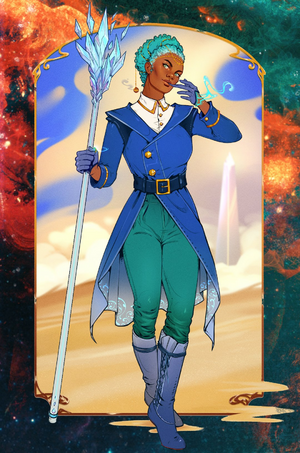
The character that I'm specifically studying is played by Aabria Iyengar. Her name is Suvirin Kedberiket, but more often known as Suvi. The character explores her identity and role within a larger nationalist, militaristic system, not unlike my own experiences in the military. In exploring these systems of power, Iyengar uses the term justification machine, the mechanism at which one may justify unconscionable acts in service to these larger systems of power. It is a type of mental gymnastics that I believe lines itself very well with reified consciousness. I want to explore how this podcast and how tabletop role-playing games as a medium allow us to better understand and explore the systems that are processed in a way that other mediums may not have access to.
Each blog post will cover a specific aspect of how Worlds Beyond Number by extension, Aabria Iyengar's character Suvi, explores nationalist thought and how to counter it.